
Contents
Table of Contents
Discover also...
Get support for your CSR audit by experts and gain a clear understanding of your strengths and areas for improvement.
85% of our customers claim to have implemented actions they would not have thought of.
If you’d like to see a concrete example of an audit conducted as part of the EcoEntreprise certification process, we recommend this article: How to Prepare for the EcoEntreprise Audit?
Everything You Need to Know About CSR Audits!
In 2021, the HEG Geneva CSR Barometer revealed that 78% of Swiss companies have implemented initiatives aligned with a CSR approach, whether formal or informal. These measures are being taken by various types of companies, regardless of their industry, size, or revenue. In fact, it is noted that micro-enterprises and SMEs with revenue of less than 0.5 million euros are implementing eco-friendly initiatives just as effectively as larger companies.
Corporate Social Responsibility (CSR) therefore applies to all companies and is becoming an increasingly integral part of their strategies, decisions, and actions. However, to ensure the success of your CSR initiative, it is essential to conduct regular audits. A CSR audit is a powerful performance driver that can help you achieve your goals on time. But what exactly is it? What is a CSR audit, and how does it relate to CSR? What is its purpose? Here’s everything you need to know before embarking on your CSR audit to help your company build a more sustainable and responsible future. As an integral part of society, companies have a role to play not only in the well-being of their workers but also in environmental impact, reducing inequalities, access to employment, and regional development. The UN’s Sustainable Development Goals cannot be achieved without them. These goals are structured around five pillars: environment, social issues, economy, governance, and regional development.
This is the primary goal of CSR: it aims to encourage participation and increase the contribution of businesses toward achieving the 17 goals set by the UN.
What is a CSR audit?
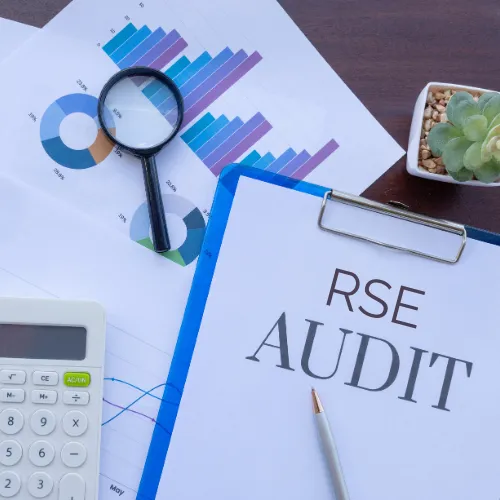
A CSR audit is a tool for evaluating a company and its performance in relation to its CSR initiatives. The company is assessed in terms of societal, social, and environmental factors, as well as governance and its integration into the local community. This audit can be conducted either internally or by a specialized firm.
An audit is an assessment—a study—that allows a company to determine where it stands in each area related to CSR and what it still needs to improve. There are several ways to conduct an audit. First, there are standardized audit checklists and certifications designed to help ensure that your objectives are met.
Alternatively, a company can set up its own indicators, more suited to its action plan and activity. In this case, we recommend using the SMART indicator method. Your objectives must be specific (precise), measurable, achievable, realistic and time-bound.
In any case, you can engage your employees by allowing them to track all internal progress. To do this, you can use a collaborative dashboard or schedule regular meetings. This will ensure that all members of the company are kept informed about the CSR initiative and can participate and share their ideas.
Why Conduct a CSR Audit?
Assessing the progress of your CSR initiative is crucial. You can evaluate how your initiative is progressing, identify challenges and obstacles, restart stalled initiatives, measure the success of specific initiatives, and determine what changes need to be made to improve your results. The information gathered during the CSR audit is essential to the successful implementation of your initiative.
It also helps keep your employees engaged in the process. Your CSR initiative shouldn’t be a project you launch and then never revisit. A CSR audit also helps ensure that you are properly complying with all regulatory requirements. It’s an opportunity to verify that you’re up to date with the regulations. You can also use this opportunity to learn more about the expectations of your employees and customers.
Conducting a CSR assessment and sharing the results with your employees and customers helps you build credibility. In fact, this allows you to highlight your commitment to social and environmental responsibility, which is significant for your brand image.
How do I obtain CSR certification?
There are a multitude of certifications and labels related to CSR. There are even specific labels depending on your industry and/or the size of your company. To obtain them, you must undergo an assessment by the organizations that developed these labels and meet the established criteria.
A CSR certification not only lends greater credibility to your CSR efforts but also helps you set specific goals. This is particularly useful, especially if you’re unsure how to go about improving your impact on society.
When it comes to certifications and labels, you’re spoiled for choice: EcoEntreprise, Entreprise citoyenne, B Corp, EcoVaids, AFNOR, as well as various ISO standards related to quality, the environment, health, safety, energy, and sustainable development are available.
Some labels have even been developed specifically for certain regions: these are known as cantonal labels. Major supporters of chambers of commerce, these labels offer greater speed at a lower cost than certifications. One example is Carbon Fri, which was launched in 2018 and aims to support SMEs in reducing their CO2 impact.
To ensure the success of your CSR initiative, we recommend following several steps. These steps will help you build a project that is viable and sustainable over the long term. Once your CSR initiative is in place, it is important to communicate your actions and, above all, to track your performance.
When should you conduct a CSR audit?
Conducting a CSR audit is useful at several stages of your project. First, you can conduct one right at the start. This initial audit will allow you to assess the current situation, identify areas for improvement, determine what needs to be implemented, and pinpoint challenges to overcome. It’s an opportunity to see if you’re behind on compliance with the law.
Next, it will be helpful to conduct regular audits. This will allow you to monitor the project’s progress, track your own progress, and ensure that changes in regulations—for example—are taken into account. These audits are also intended to help your teams consistently work toward implementing this CSR initiative and ensuring its success. As a result, CSR will play a greater role in their work and in how they approach new projects.
As part of an effective CSR strategy, you should set deadlines for achieving your goals. When those deadlines arrive, it’s time to conduct an audit of your performance. This audit will help you determine whether your goals have been met and, if not, the reasons for the failure.
What is the CSR audit checklist?
CSR audit checklists are the tools used to evaluate the audit. You can create a checklist for each objective in each sector. For example, your goal of reducing energy consumption as part of your efforts to minimize environmental impact will have its own checklist. These goals can relate to environmental, social, societal, ethical, and communication aspects, or even to your own CSR management practices.
This grid needs to be populated with a range of information. To do this, you’ll need to carry out a complete study of your production methods and their impact, and your progress towards your final objective.
The audit grid is a tool for visualizing progress and potential delays in each sector. Consequently, its precise content depends on each item to be monitored and on your activities.
Generally speaking, audit grids use 5 levels of progress. However, you can adapt your grids according to your objectives, but this is only an indication. The most important thing is that your evaluation grids are precise and clearly indicate improvements and delays.
- Level 1: Behind
This level means that nothing has been put in place, or even thought about. For example, if you’re at level 1 in terms of energy consumption, this means that you haven’t put any action in place, nor thought about any particular measure. It could also mean that you’re lagging behind legislation. - Level 2: Unstructured action
At this level, you’ve thought about actions, but you haven’t put in place any organization or structuring to ensure follow-up action. These actions are not necessarily coordinated either. - Level 3: Action implemented and organized
In this case, you have a method and an action plan. You have defined an organization that should enable you to achieve your objectives. - Level 4: Effective action plan and reflection for the future
At Level 4, you have implemented your action plan and achieved positive results. You’re thinking about new actions for the future. You’re keeping an eye on regulations and trying to anticipate them. - Level 5: Active participation and early implementation
For this last level, your action plan is up and running, and you’re seeing results. You have even already implemented measures that anticipate the regulations. As a company that is ahead of the game in this respect, you can communicate about your actions and carry out advocacy and awareness-raising campaigns to influence other companies to follow suit.
Ideally, it is advisable to conduct an audit of all the areas you wish to improve as part of your CSR initiative: environmental, societal, social, governance, regional development, and more. Your audit should be thorough and may also cover your CSR communications, your transparency policy, your choice of business partners, your regulatory monitoring methods, your CSR management, and many other areas.
Here are a few examples.
Audit your environmental performance
For your environmental performance, you need to focus on several elements and adapt your evaluation grids. Each element needs to be studied. In this way, you’ll be able to determine the level of advancement of each element in your evaluation grid.
For example, you can draw up a carbon footprint and track your greenhouse gas emissions. This assessment grid will need to encompass all the actions taken to reduce your emissions, whether in terms of mobility or more responsible purchasing decisions, for example.
You can measure your actions on: energy consumption, water consumption and pollution, your impact on flora and fauna, the use of renewable energies, the geographical distribution of your company and the companies that supply you, the proportion of waste recycled and the volume of your waste, the proportion of your journeys made using clean means of transport, the percentage of days worked teleworking, but also the percentage of Swiss or even more local partner companies, for example.
Audit your social and societal performance
For this type of audit, you can analyze your progress in terms of gender equality (equal pay and access to employment), the rate of permanent contracts, the satisfaction and well-being of your employees and health at work (with data such as absenteeism, accident risk, measures taken in the event of contact with a dangerous product, for example).
You can also help young people find employment by offering internships, work-study programs or positions for young people who have just graduated. You can also track the number of jobs accessible to people with disabilities, as well as the accessibility of your premises and services/products for them.
Conduct a CSR audit of your communications
It’s a good idea to devote part of your CSR audit to your CSR communications. This will allow you to determine who you’re communicating with (whether it’s exclusively internal or not) and through which channels.
Communication is important in CSR because it allows you to reap the marketing and reputation benefits for your company. It’s also a way to lend credibility to your initiative by highlighting its importance. This demonstrates that your approach is structured and well-thought-out.
For this audit, you can find out what your employees know about your approach and how they feel about it. This is particularly useful for identifying which communication practices are effective and which are ineffective or even counterproductive.
More than 30 organizations have already placed their trust in us with their sustainable transition. How about you? Take action and get started on your CSR initiative with us!