



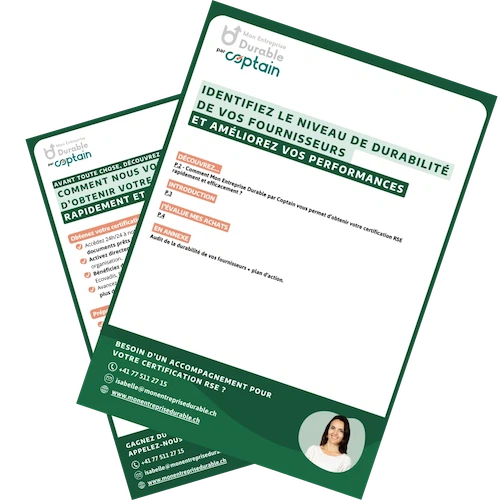
Download our sustainable procurement audit and action plan tool
Assess your suppliers’ sustainability, improve your CSR performance, and develop a structured responsible procurement policy.
For any organization, the way it makes purchases is a powerful tool for creating impact. This practical guide, which includes a ready-to-use Excel spreadsheet, allows you to objectively evaluate your suppliers based on three fundamental criteria: environmental, social, and location. You can then develop a realistic, measurable CSR action plan aligned with your CSR goals. You’ll find:
- A step-by-step method for analyzing your existing purchases
- A supplier evaluation model based on a sustainability scale
- A tool for prioritizing and planning your improvement initiatives
By clicking “Download the guide,” you agree to have your information used to contact you in connection with our support services. Your information will remain strictly confidential and will never be shared with third parties. Learn more about our privacy policy.
How can this document help you ?

Quickly Audit Your Purchases and Suppliers
Based on your expenses from the previous year, you can create a summary table, rate your suppliers according to specific criteria, and determine whether they are considered “sustainable” or not. The proposed method is easy to implement and perfectly suited for small and medium-sized businesses.
Identify your top areas for improvement
The table helps you focus on the purchases with the highest value. It also helps you come up with ideas for improvement regarding both supplier selection and your own usage patterns.
Track your progress and set clear goals
By setting a target score (e.g., 60% sustainable suppliers), you can track your sustainable procurement rate over time, report your results, and rally your teams around concrete goals.
The 3 key topics covered in the guide:
1 – A multi-criteria assessment of your purchases: the file guides you through the analysis based on three complementary areas: environmental criteria (e.g., energy, recycled materials), social criteria (e.g., equality, safety), and location criteria.
2 – A personalized, step-by-step action plan: You’ll be able to set goals for progress, one purchase at a time, and plan how to implement them based on their impact and feasibility.
3 – Relevant performance metrics: sustainable procurement rate, percentage of sustainable suppliers, relevant budget… you have all the metrics you need to effectively manage your responsible procurement strategy.


