


Table of Contents
Table of Contents
See also...
Get your CSR initiative off to a good start: participatory audit, prioritized action plan and selection ofoCSR tools for your company in 4 weeks.
97% of customers of Mon Entreprise Durable say they have carried out their CSR projects without slowing down their business operations.
5 inspiring business success stories
A few years ago, a major Swiss company made headlines for less-than-flattering reasons. Swissair, once a symbol of national pride, collapsed under the weight of financial scandals and ethical lapses. This event left a lasting impression and underscored the crucial importance of Corporate Social Responsibility (CSR). Since then, many companies in Switzerland have taken bold steps to ensure ethical and sustainable business practices.
CSR is not just a theoretical concept or a passing trend. It has become a necessity for companies that want to thrive in a world that is increasingly aware of environmental and social issues. Companies that succeed in this area lead by example by integrating sustainable and ethical practices into their business models.
In this article, we’ll explore five inspiring examples of companies that have successfully turned their CSR initiatives into tangible success. These companies—whether in the outdoor, retail, web hosting, ethical fashion, or finance sectors—all demonstrate that it is possible to balance profitability with responsibility. Get ready to discover how Patagonia, Zélo, Infomaniak, Veja, and the Swiss Alternative Bank are revolutionizing their respective industries through a committed approach to CSR.
Example 1: Patagonia, the green outdoor pioneer
Patagonia is an iconic company in the outdoor industry, but it is not only known for its high-quality gear. Since its founding in 1973 by Yvon Chouinard, Patagonia has been committed to an exemplary CSR approach, which today positions it as a role model for Swiss companies seeking to combine economic performance with social and environmental responsibility.
Patagonia has built its reputation on strong values: respect for the environment and the well-being of communities. Asa B Corp-certified company, it is committed to adhering to rigorous standards of social and environmental performance, accountability, and transparency. This certification is not just another label, but a genuine commitment to a process of continuous improvement.
One of the most notable aspects of Patagonia’s CSR strategy is its clothing recycling program, called“Worn Wear.” This program encourages customers to send back their old Patagonia clothing so it can be repaired, reused, or recycled. Not only does this reduce waste, but it also promotes a circular economy—a concept that is becoming increasingly relevant for Swiss companies seeking to reduce their environmental footprint.
Patagonia doesn’t just recycle; it also chooses sustainable materials for its products. For example, the majority of the brand’s garments are made from organic cotton, recycled polyester and other eco-responsible fibers. In fact, the company made a bold choice in 2018 by announcing that its tax profits would be reinvested in initiatives to combat climate change. This decision, while radical, shows just how deeply Patagonia’s environmental commitment is rooted in its DNA.
Another pillar of Patagonia’s CSR is its social commitment. The company ensures that all its employees enjoy good working conditions, both in its offices and at its suppliers’ factories. It has implemented programs to support workers, offering benefits such as on-site daycare and flexible work schedules. For Patagonia, a sustainable company is also one that takes care of its employees.
The company is also active in environmental activism. Patagonia dedicates 1% of its sales to environmental preservation initiatives through its “1% for the Planet” program. It supports numerous non-profit organizations working to protect ecosystems and natural habitats. This commitment shows that even companies can play a crucial role in protecting our planet.
Patagonia offers a wealth of lessons for businesses. Adopting a CSR approach means not only complying with environmental laws, but going beyond that to integrate these practices into every aspect of the business. Patagonia demonstrates that such a strategy can not only benefit the environment and society but also strengthen a company’s reputation and customer loyalty—crucial elements for long-term success.
Example 2: Zélo, the grocery store on the road to a zero-waste future
Zélo is not your average grocery store. Founded in Gland in 2020, this innovative company has taken on the challenge of zero waste head-on. In just a few years, Zélo has become a go-to destination for those in French-speaking Switzerland who want to consume more responsibly. The concept is simple yet revolutionary: a mobile grocery store offering products without single-use packaging, delivered directly to your home or to pickup locations.
Zélo stands out for its business model focused on sustainability. Customers can order a wide range of food and non-food products online, all packaged in reusable containers. Once the products have been consumed, customers return the containers on the next delivery, creating a virtuous cycle of reuse. This system makes it possible to drastically reduce plastic waste and other packaging, a major issue in today’s society.
Zélo’s commitment goes beyond waste reduction. The grocery store favors local and organic productsby supporting Swiss producers and reducing the carbon footprint associated with transporting goods. By working directly with local producers, Zélo guarantees not only the freshness and quality of products, but also fair remuneration for farmers. This approach promotes a sustainable and resilient local economy.
Another remarkable aspect of Zélo’s CSR approach is its commitment to the community . The company regularly organizes workshops and educational events to raise public awareness about zero-waste issues and promote more responsible consumption habits . These initiatives strengthen the bond between the grocery store and its customers, while also spreading beneficial eco-friendly practices to a wider audience.
Zélo also adopts sustainable internal practices. All aspects of the business, from inventory management to logistics, are designed to minimize environmental impact. For example, the vehicles used for deliveries are electric, reducing CO2 emissions.
Zélo serves as an inspiring model for businesses, demonstrating what an integrated and innovative CSR approach can look like. It shows that it is possible to balance economic profitability with environmental responsibility. By adopting zero-waste practices, supporting local producers, and educating the community, Zélo creates value not only for its customers but also for society and the environment.
Zélo’s success shows that the transition to a circular economy is not only possible but also desirable. By tackling the waste problem at its source and creating a consumption model based on reuse, the company is paving the way for new sustainable business practices. Swiss companies can draw inspiration from this example to develop their own zero-waste initiatives and strengthen their commitment to CSR.

Example 3: Infomaniak, the committed web host
Infomaniak is a major player in the web hosting industry in Switzerland, but what truly sets it apart is its exemplary commitment to CSR. Since its founding in 1994, this Geneva-based company has continually innovated to reduce its environmental impact while providing high-quality services to its customers.
Infomaniak has taken bold steps to become a leader in sustainability in the technology sector. The company uses only renewable energy to power its data centers, a choice that significantly reduces its carbon footprint. In 2007, Infomaniak was the first hosting company in Europe to fully offset its CO2 emissions, a commitment that continues today with even more ambitious initiatives.
One of the company’s flagship projects is the construction of environmentally-friendly data centers. Infomaniak has invested in infrastructures that use innovative cooling systems, minimizing energy consumption. For example, its data centers are cooled using groundwater rather than energy-hungry air-conditioning systems. This approach not only reduces energy consumption, but also extends equipment life.
Infomaniak doesn’t stop at reducing its environmental footprint. The company is also very active on the social front. It is committed to offering its employees optimal working conditions, including flexible working hours, telecommuting and ongoing training. Infomaniak promotes equal opportunities and diversity within its team, which strengthens the company’s cohesion and overall performance.
Another notable aspect of Infomaniak’s CSR approach is its commitment to transparency and ethics. The company regularly publishes detailed reports on its sustainability initiatives and performance. This transparency not only helps build trust among customers and partners but also inspires other companies to follow suit.
Infomaniak also supports numerous local and international initiatives. The company invests in reforestation projects, funds environmental NGOs and supports actions to protect biodiversity. For example, Infomaniak is committed to donating 1% of its sales to environmental causes. This financial commitment demonstrates a concrete desire to have a positive impact beyond its core activities.
For businesses, Infomaniak is a shining example of what an integrated and proactive CSR approach can look like. The company demonstrates that it is possible to combine technology and sustainability while remaining competitive in the market. Adopting sustainable and responsible practices can not only enhance a company’s brand image but also attract customers and talent who share the same values.
Example 4: Veja, the ethical fair trade sneaker
Veja is much more than a brand of sneakers; it’s a symbol of ethical commitment in the fashion industry. Founded in 2005 by Sébastien Kopp and François-Ghislain Morillion, Veja quickly established itself as a pioneer in fair trade and sustainability. The company proves that it is possible to produce elegant shoes while respecting the highest standards of social and environmental responsibility.
Veja’s business model is based on total transparency. Unlike many brands that outsource their production under often opaque conditions, Veja works directly with cooperatives of small-scale producers in Brazil. These farmers grow organic cotton and wild rubber under fair conditions, guaranteeing a stable and fair income for their work. This choice of sustainable and organic materials reduces the environmental impact of each pair of shoes produced.
Veja also stands out for its commitment to environmentally-friendly production practices. The company uses eco-friendly materials such as organic cotton, wild Amazonian rubber and recycled plastic bottles to manufacture its sneakers. By avoiding harmful chemicals and favoring sustainable production methods, Veja minimizes its ecological footprint while offering high-quality products.
Veja’s commitment goes beyond the materials used. The company ensures that all stages of the production chain meet rigorous ethical standards. Veja’s partner factories in Brazil offer decent working conditions, fair wages and reasonable working hours. This commitment to the well-being of workers is a central pillar of Veja’s philosophy, in marked contrast to the often-criticized practices of the fashion industry.
In Switzerland, Veja has won over a customer base that is increasingly aware of ethical and environmental issues. Swiss consumers, known for their sensitivity to sustainability issues, find in Veja a brand that embodies their values. Points of sale across the country and online boutiques facilitate access to these ethical products, encouraging more people to opt for more responsible fashion.
Veja doesn’t just produce sustainable sneakers; it is also committed to education and public awareness. The company regularly shares detailed information about its practices and partners, enabling consumers to understand the impact of their choices. This transparency builds customer trust and loyalty, while inspiring other companies to adopt similar practices.
Veja offers a powerful example of what a successful CSR approach can look like in the fashion industry. By prioritizing sustainable materials, ensuring ethical working conditions, and embracing complete transparency, Veja demonstrates that it is possible to balance style, economic performance, and social responsibility. This model can serve as a source of inspiration for any company seeking to integrate CSR into its core business.
Example 5: Alternative Bank Switzerland, positive impact financing
Alternative Bank Switzerland (BAS) is a shining example of what a financial institution can achieve when it places sustainability and ethics at the heart of its operations. Founded in 1990, BAS’s mission is to finance projects that have a positive impact on society and the environment, while offering transparent and fair banking services.
BAS stands out for its unique philosophy: using money responsibly to create social and ecological added value. Unlike traditional banks, which often invest in controversial sectors such as fossil fuels or armaments, BAS chooses to support projects in the fields of renewable energies, organic farming, social housing and the solidarity economy. This approach not only generates financial returns, but also promotes sustainable and inclusive development.
Transparency and ethics are the watchwords at BAS. The bank regularly publishes detailed reports on the use of funds and the impact of projects financed. This transparency strengthens customer confidence and demonstrates the bank’s commitment to social responsibility. BAS customers know exactly where their money is going and what types of projects they are supporting, which is a powerful loyalty-building factor.
Another key aspect of BAS’s CSR approach is its commitment to its employees. The bank offers attractive working conditions, including flexible schedules, opportunities for continuing education, and a respectful work environment. By taking care of its employees, BAS ensures not only their well-being but also their commitment and productivity, thereby creating a virtuous cycle.
BAS also plays an active role in public awareness and education. It organizes conferences, workshops and publications to inform citizens about the benefits of a sustainable and inclusive economy. This educational mission is crucial to encouraging collective awareness and promoting more responsible financial behavior.
Alternative Bank Switzerland is an inspiring model of ethical and sustainable finance. It shows that it is possible to reconcile profitability and responsibility by making informed investment choices and adopting transparent banking practices. Companies can draw inspiration from this example to develop their own responsible financing policies, whether in terms of investments or banking relationship management.
Bonus: Mon Entreprise Durable, a CSR Strategy for Small Businesses
Mon Entreprise Durable perfectly embodies the implementation of a CSR strategy tailored to a company with fewer than ten employees. Since our company was founded, we have taken concrete steps to reduce our environmental footprint and promote a positive impact on society. Here are a few of them.
In terms of soft mobility, we encourage our employees to adopt environmentally-friendly modes of transport for both business and personal travel. This support takes the form of financial assistance for the use of public transport. This action actively contributes to reducing our carbon footprint, in line with our objectives to reduce CO2 emissions.
Another key focus of our CSR policy is responsible digital technology. Mindful of the environmental impact of our digital operations, we have opted for refurbished equipment for our computers and smartphones. Our monitors come from Réalise, which refurbishes professional-grade equipment while providing reintegration programs. In addition, our web platform is hosted by Infomaniak, a Swiss provider recognized for its commitment to eco-friendly and responsible hosting.
On the social front, since 2024, we have introduced participative assemblies based on the principle of collegiality. These meetings bring together our employees and strategic partners to make important decisions about the company’s direction. This democratic process fosters transparency, involvement and cooperation within our team.
We have also chosen to actively promote the professional integration of refugees and migrants. In collaboration with the Singa associationwe are providing a support platform dedicated to entrepreneurs from these communities. By providing this resource, we are enabling Singa to expand its action, doubling the number of people they support.
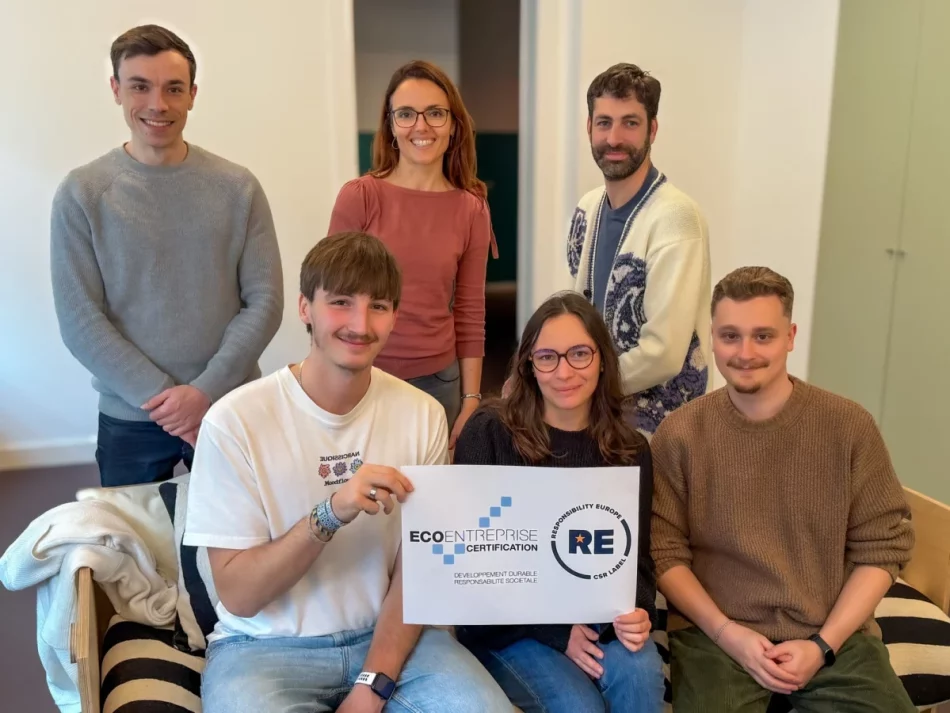
Thanks to these initiatives, we are proud to have earned the EcoEntreprisecertification in 2024, a recognition of our commitment to sustainability and social responsibility.
And what about our clients? Here are three initiatives underway in French-speaking Switzerland: Hilton Geneva and its sustainability strategy, centered on procurement and mobility; Harsch and its EcoVadis Silver Medal, achieved in six months; and Geneva Tourism and its Responsible Tourism Strategy 2030, developed in collaboration with local stakeholders. You can also explore all our client projects.
Conclusion
These five examples demonstrate that a CSR approach can positively transform companies, whether they operate in the outdoor, retail, technology, fashion, or finance sectors. Patagonia, Zélo, Infomaniak, Veja, and the Swiss Alternative Bank show that integrating sustainable and ethical practices can strengthen competitiveness and reputation. By drawing inspiration from these success stories, Swiss companies can not only improve their environmental and social impact but also ensure their long-term prosperity. Embrace CSR and contribute to a more sustainable and equitable future.
Your goal is to obtain the EcoEntreprise certification? Put your trust in a company that has been through the same programme. We also support you with the standards B Corpand CSRD and EcoVadis.